Trump defends Iran peace talks against critics
AFBytes Brief
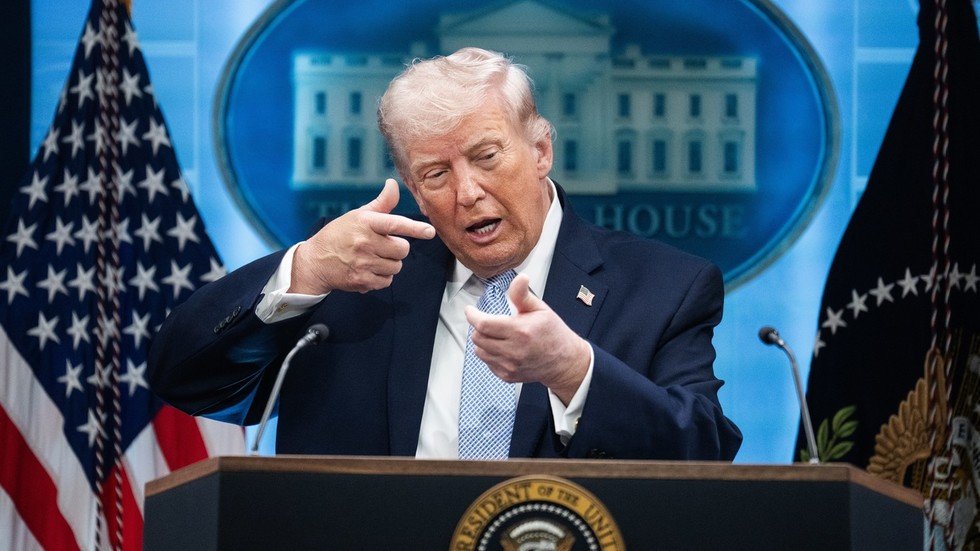
President Trump dismissed critics of the developing agreement with Iran. He stated that discussions continue in a structured manner without rushing the outcome.
Why this matters
Ongoing U.S.-Iran talks affect foreign policy decisions that can influence military deployments and trade sanctions. Shifts in these negotiations may alter energy prices and defense spending priorities for American taxpayers.
Quick take
- Money Angle
- Any finalized agreement could adjust sanctions that currently restrict Iranian oil exports and affect global energy markets.
- Market Impact
- Oil futures and defense contractor equities may see volatility depending on whether sanctions ease or remain in place.
- Who Benefits
- U.S. energy importers stand to gain from potential increases in global supply if restrictions on Iranian crude are reduced.
- Who Loses
- Domestic oil producers could face downward pressure on prices if additional supply enters the market.
- What to Watch Next
- Watch for the next public statement from the White House or State Department on negotiation status and any announced sanctions adjustments.
Perspectives on this story
AI-generated analytical lenses meant to encourage you to think across multiple frames. Not attributed to any individual; not presented as fact.
Household Impact
How this affects family budgets, jobs, and day-to-day life.
Changes in Middle East policy can affect gasoline prices paid by American drivers and households.
America First View
How this lands for readers prioritizing American sovereignty, borders, and domestic industry.
Negotiations test the balance between securing U.S. interests abroad and avoiding new foreign entanglements.
Institutional View
How established institutions -- agencies, courts, allied governments -- are likely to frame it.
Federal agencies will evaluate any deal against existing statutes governing sanctions and arms control agreements.
Civil Liberties View
How this reads through the lens of constitutional rights, free speech, and due process.
Public debate over foreign policy raises questions about transparency in executive branch decision-making.
National Security View
How this matters for defense posture, intelligence, and adversary deterrence.
The outcome bears on U.S. deterrence posture and the security of regional allies in the Persian Gulf.
AFBytes analysis is AI-assisted and generated from source metadata, article summaries, and topic context. It is intended to help readers think through implications, not replace the original reporting from rt.com. See our AI and Summary Disclosure for details.
Discussion on
Trending posts from X.
🇺🇸 PRESIDENT TRUMP JUST POSTED THIS!! pic.twitter.com/PzHONsqlE6
— Ash Crypto (@AshCrypto) May 24, 2026
The Senate GOP will continue to fail Americans until spineless @LeaderJohnThune is removed.
— Gunther Eagleman™ (@GuntherEagleman) May 24, 2026
Thune’s feelings are hurt and he despises President Trump. He will block the agenda for the next 2 1/2 years.
Believe it.
Fire John Thune pic.twitter.com/XyyAeukvdu
President Obama was hands down a better president than Donald Trump in every way.
— 💙Brittney💙 (@AZ_Brittney) May 24, 2026
Barack Obama is truly the definition of presidential.
YES or NO? ✋ pic.twitter.com/kJ2egYpvTQ
THIS WEEK:
— Real Blonde Broker (@blondebroker1) May 24, 2026
Trump and Iran discussions are center stage.
• MEMORIAL DAY (MON.) Market is closed
• CONSUMER CONFIDENCE (TUES.)
• CORE PCE INFLATION, Q1 GDP and JOBLESS CLAIMS (THURS.)
Software stock earnings are dominant $CRM, $SNOW, $MDB $ZS, $MRVL, $DELL, $COST, $HP pic.twitter.com/e0bRhsXK9t