DARPA explores epigenetic changes for cognitive and medical uses
AFBytes Brief
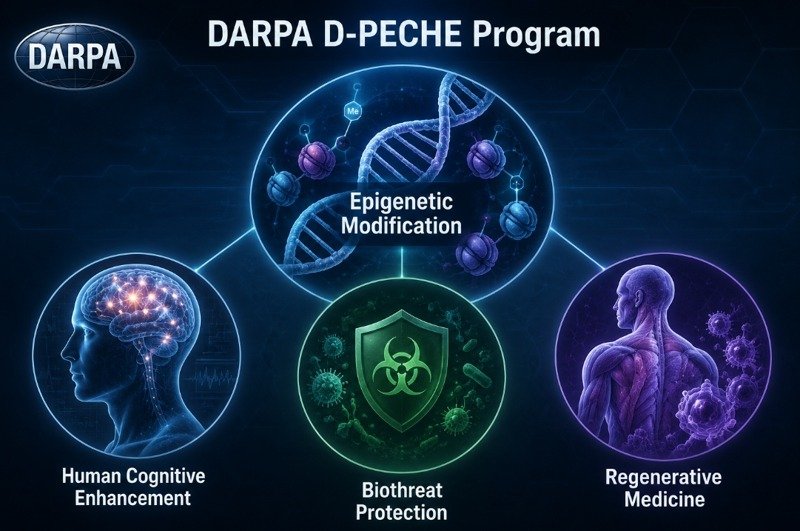
DARPA’s D-PECHE program is developing techniques to add and remove epigenetic marks on DNA. The work targets cognitive performance, protection against biological threats, and regenerative medicine.
Why this matters
Defense-funded research into biological modification could eventually affect medical treatments available to veterans and the broader public.
Quick take
- Money Angle
- Successful outcomes could create new intellectual property and contract opportunities for biotechnology firms working with the Department of Defense.
- Market Impact
- Biotech companies with defense relationships may attract additional investor interest if program milestones are achieved.
- Who Benefits
- Contractors selected for D-PECHE phases stand to receive research funding and potential follow-on work.
- Who Loses
- Competitors without access to the same defense funding streams may fall behind in related technical areas.
- What to Watch Next
- Track future DARPA program updates or published findings for indications of progress toward human applications.
Perspectives on this story
AI-generated analytical lenses meant to encourage you to think across multiple frames. Not attributed to any individual; not presented as fact.
Household Impact
How this affects family budgets, jobs, and day-to-day life.
Advances in regenerative medicine could eventually influence treatment options for service-related injuries.
America First View
How this lands for readers prioritizing American sovereignty, borders, and domestic industry.
U.S. leadership in epigenetic tools would support domestic technological advantage in both defense and medicine.
Institutional View
How established institutions -- agencies, courts, allied governments -- are likely to frame it.
Defense research agencies would frame the work within statutory authorities for basic and applied science programs.
Civil Liberties View
How this reads through the lens of constitutional rights, free speech, and due process.
Any future human applications would raise questions about consent, long-term effects, and equitable access.
National Security View
How this matters for defense posture, intelligence, and adversary deterrence.
Enhanced cognitive performance or biothreat resistance could strengthen force readiness and resilience.
Adversary View
How foreign rivals are likely to frame this story. Not presented as fact and does not reflect the views of AFBytes.
Peer competitors may interpret the program as another U.S. effort to maintain technological superiority in the life sciences.
AFBytes analysis is AI-assisted and generated from source metadata, article summaries, and topic context. It is intended to help readers think through implications, not replace the original reporting from activistpost.com. See our AI and Summary Disclosure for details.