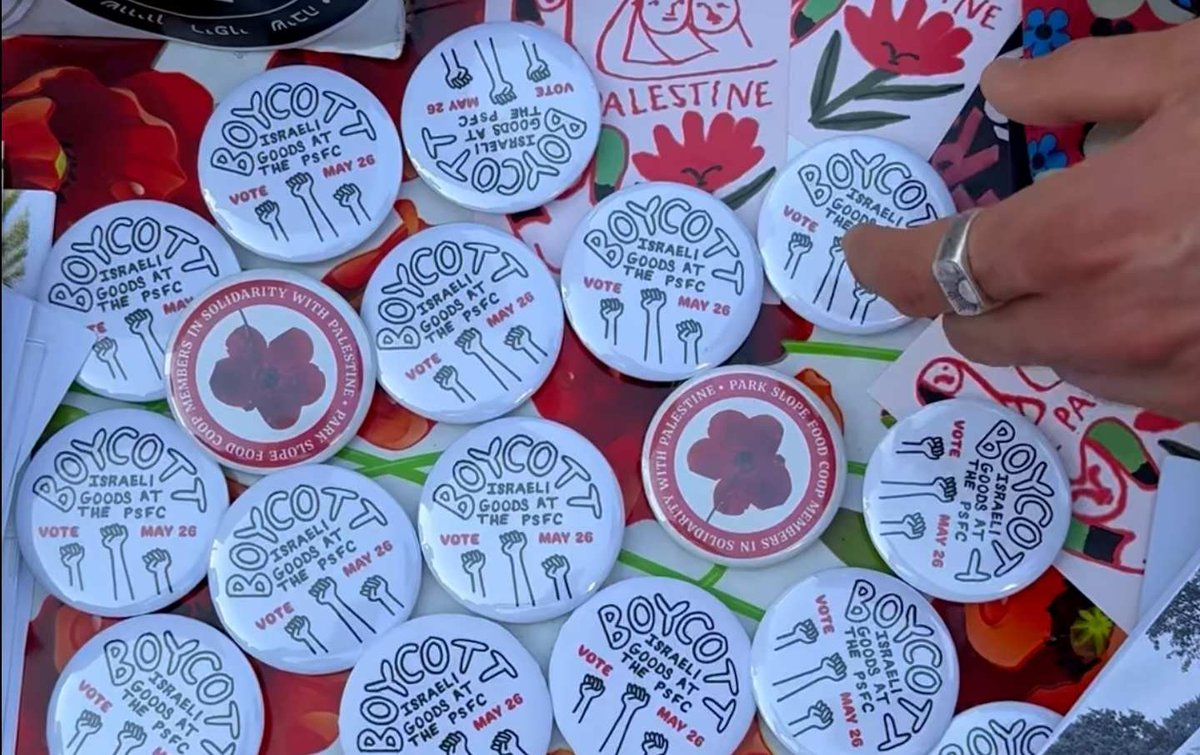
Park Slope Coop BDS vote draws national attention
AFBytes Brief
The Park Slope Food Coop's internal battle over adopting a BDS policy has become a focal point for activists and observers tracking consumer activism.
Why this matters
Consumer cooperative decisions on boycotts can influence local purchasing patterns and spark wider discussion of corporate political stances.
Quick take
- What to Watch Next
- Follow member-vote outcomes and any subsequent changes in supplier contracts.
Perspectives on this story
AI-generated analytical lenses meant to encourage you to think across multiple frames. Not attributed to any individual; not presented as fact.
Household Impact
How this affects family budgets, jobs, and day-to-day life.
Members may face changes in product availability or prices depending on the outcome of boycott policies.
America First View
How this lands for readers prioritizing American sovereignty, borders, and domestic industry.
Consumer boycotts can affect trade relationships and domestic sourcing decisions.
Institutional View
How established institutions -- agencies, courts, allied governments -- are likely to frame it.
Cooperatives operate under their own bylaws but must still comply with applicable state and federal commerce rules.
Civil Liberties View
How this reads through the lens of constitutional rights, free speech, and due process.
Boycott policies raise questions about free association and the rights of dissenting members.
National Security View
How this matters for defense posture, intelligence, and adversary deterrence.
Foreign-policy-related boycotts can intersect with export-control and sanctions compliance issues.
AFBytes analysis is AI-assisted and generated from source metadata, article summaries, and topic context. It is intended to help readers think through implications, not replace the original reporting from thenation.com. See our AI and Summary Disclosure for details.