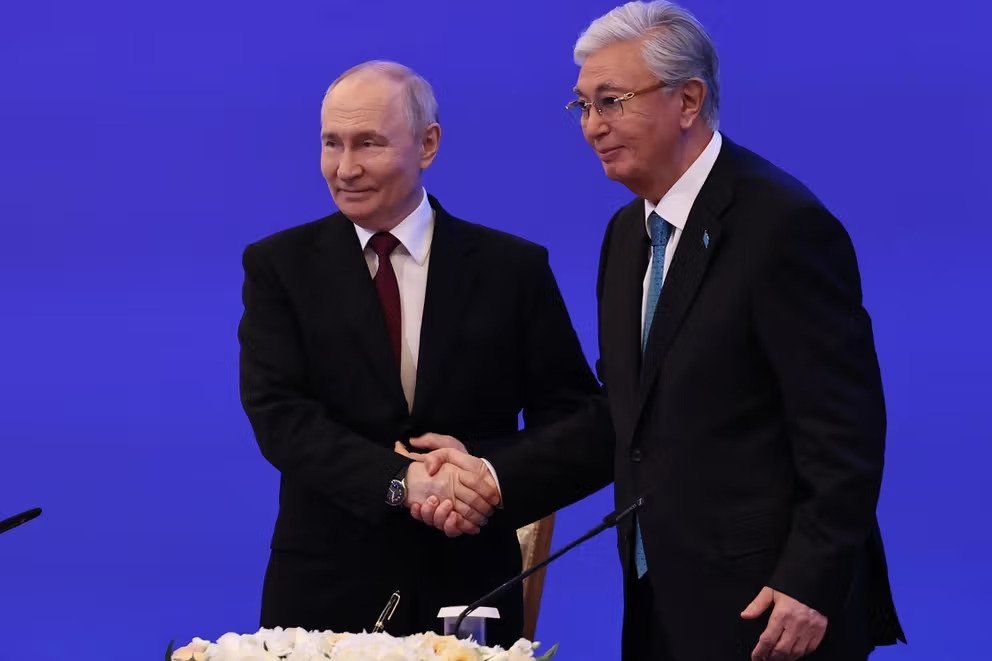
Russia Kazakhstan nuclear power agreement signed
AFBytes Brief
Russia and Kazakhstan signed a $16.5 billion agreement to build Kazakhstan's first nuclear power plant along with safety cooperation measures.
Why this matters
Nuclear infrastructure projects influence regional energy markets and nonproliferation standards.
Quick take
- Money Angle
- State-backed nuclear projects require sustained capital commitments and long-term financing structures.
- Market Impact
- Nuclear technology and uranium supply contracts may see increased activity from the agreement.
- Who Benefits
- Russian nuclear firms secure construction contracts and technology export revenue.
- Who Loses
- Competing nuclear vendors lose potential market share in Central Asia.
- What to Watch Next
- Groundbreaking timelines and financing milestones will confirm project execution pace.
Perspectives on this story
AI-generated analytical lenses meant to encourage you to think across multiple frames. Not attributed to any individual; not presented as fact.
Household Impact
How this affects family budgets, jobs, and day-to-day life.
New nuclear capacity may stabilize long-term electricity prices for Kazakh consumers.
America First View
How this lands for readers prioritizing American sovereignty, borders, and domestic industry.
Nuclear cooperation between rivals raises questions about U.S. technology export competitiveness.
Institutional View
How established institutions -- agencies, courts, allied governments -- are likely to frame it.
International atomic energy bodies will review safety and nonproliferation compliance.
Civil Liberties View
How this reads through the lens of constitutional rights, free speech, and due process.
No direct civil liberties matters are raised by bilateral nuclear infrastructure deals.
National Security View
How this matters for defense posture, intelligence, and adversary deterrence.
Expanded nuclear infrastructure affects regional energy security and proliferation risks.
Adversary View
How foreign rivals are likely to frame this story. Not presented as fact and does not reflect the views of AFBytes.
Russian state media frames the agreement as evidence of reliable partnership and technological leadership.
AFBytes analysis is AI-assisted and generated from source metadata, article summaries, and topic context. It is intended to help readers think through implications, not replace the original reporting from khaama.com. See our AI and Summary Disclosure for details.