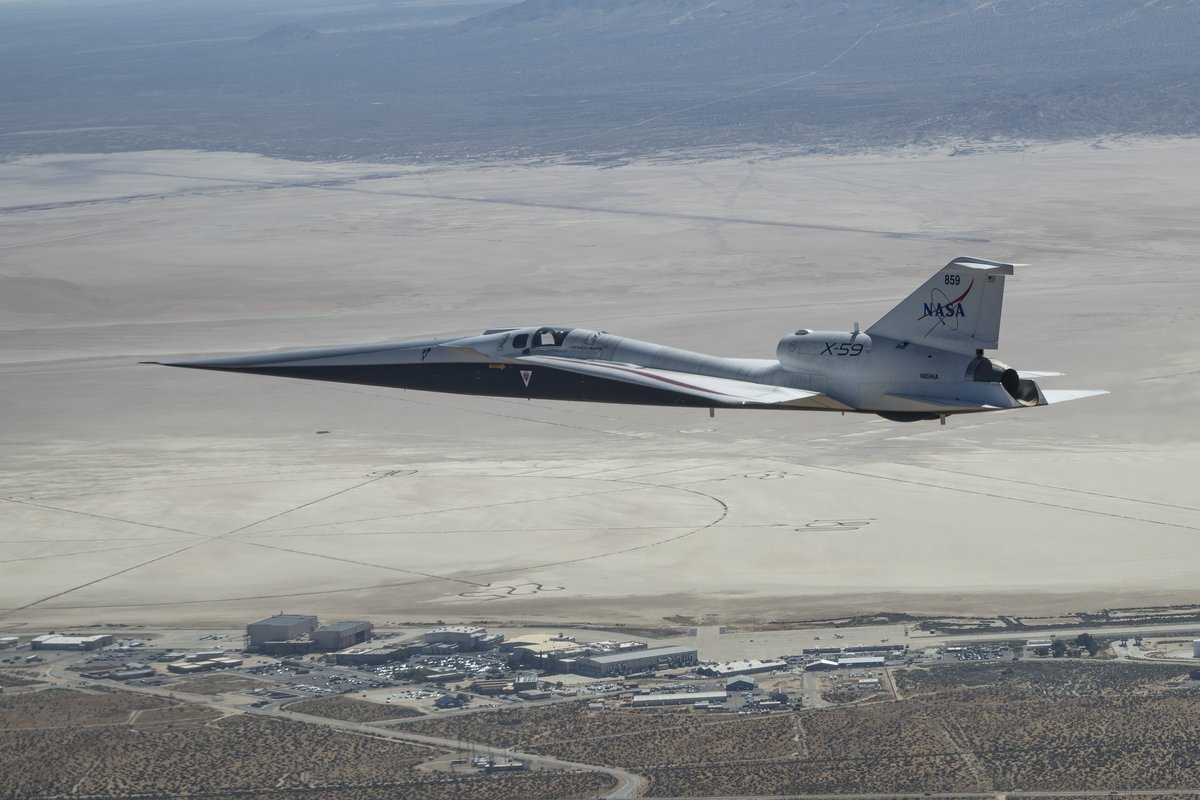
NASA X-59 completes low speed test flights
AFBytes Brief
NASA conducted low-speed flight tests of the X-59 quiet supersonic aircraft at its Armstrong facility. The tests focus on handling characteristics at reduced speeds.
Why this matters
Aerospace research programs influence future civilian aircraft development timelines and related manufacturing jobs.
Quick take
- Money Angle
- Continued NASA aeronautics funding supports contractor work in the aerospace sector.
- Market Impact
- Aerospace suppliers tied to NASA programs may see steady contract flow.
- Who Benefits
- Aerospace contractors gain from sustained research program spending.
- What to Watch Next
- Next scheduled X-59 envelope expansion test will indicate progress toward supersonic demonstration.
Perspectives on this story
AI-generated analytical lenses meant to encourage you to think across multiple frames. Not attributed to any individual; not presented as fact.
Household Impact
How this affects family budgets, jobs, and day-to-day life.
No immediate change to consumer travel costs or aviation employment is expected.
America First View
How this lands for readers prioritizing American sovereignty, borders, and domestic industry.
Domestic aerospace research maintains U.S. technological leadership in civilian aviation.
Institutional View
How established institutions -- agencies, courts, allied governments -- are likely to frame it.
NASA follows established test protocols under its statutory aeronautics mandate.
Civil Liberties View
How this reads through the lens of constitutional rights, free speech, and due process.
No privacy or surveillance issues are associated with the flight tests.
National Security View
How this matters for defense posture, intelligence, and adversary deterrence.
Quiet supersonic technology could support future military transport requirements.
Adversary View
How foreign rivals are likely to frame this story. Not presented as fact and does not reflect the views of AFBytes.
No clear adversary framing applies to this story.
AFBytes analysis is AI-assisted and generated from source metadata, article summaries, and topic context. It is intended to help readers think through implications, not replace the original reporting from nasa.gov. See our AI and Summary Disclosure for details.