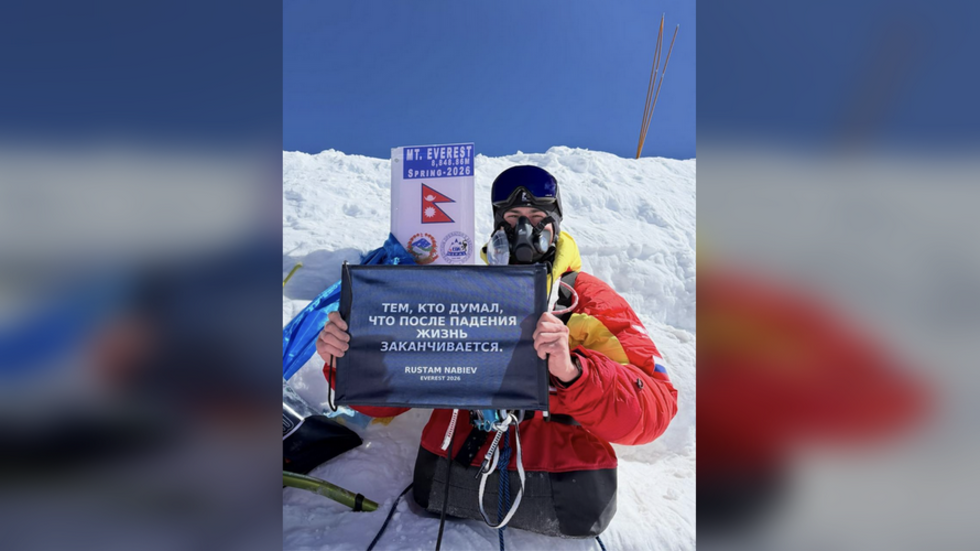
Russian double amputee climbs Everest with hands
AFBytes Brief
Russian climber Rustam Nabiev reached the summit of Everest despite having lost both legs. He completed the ascent using only his hands and arms. The feat is presented as a personal milestone dedicated to others facing similar disabilities.
Why this matters
The story highlights individual determination in extreme physical challenges but carries no direct implications for U.S. household budgets, jobs, or policy.
Perspectives on this story
AI-generated analytical lenses meant to encourage you to think across multiple frames. Not attributed to any individual; not presented as fact.
Household Impact
How this affects family budgets, jobs, and day-to-day life.
Extreme sports achievements like this have negligible effect on family budgets or daily living costs.
America First View
How this lands for readers prioritizing American sovereignty, borders, and domestic industry.
The story does not touch U.S. sovereignty, borders, or domestic industry.
Institutional View
How established institutions -- agencies, courts, allied governments -- are likely to frame it.
No federal agencies or regulatory bodies are involved in reporting this personal athletic record.
Civil Liberties View
How this reads through the lens of constitutional rights, free speech, and due process.
No constitutional rights or privacy issues arise from coverage of this climb.
National Security View
How this matters for defense posture, intelligence, and adversary deterrence.
The event has no bearing on defense posture, supply chains, or critical infrastructure.
AFBytes analysis is AI-assisted and generated from source metadata, article summaries, and topic context. It is intended to help readers think through implications, not replace the original reporting from rt.com. See our AI and Summary Disclosure for details.