Samsung LG Uplus 6G ISAC radar replacement test
AFBytes Brief
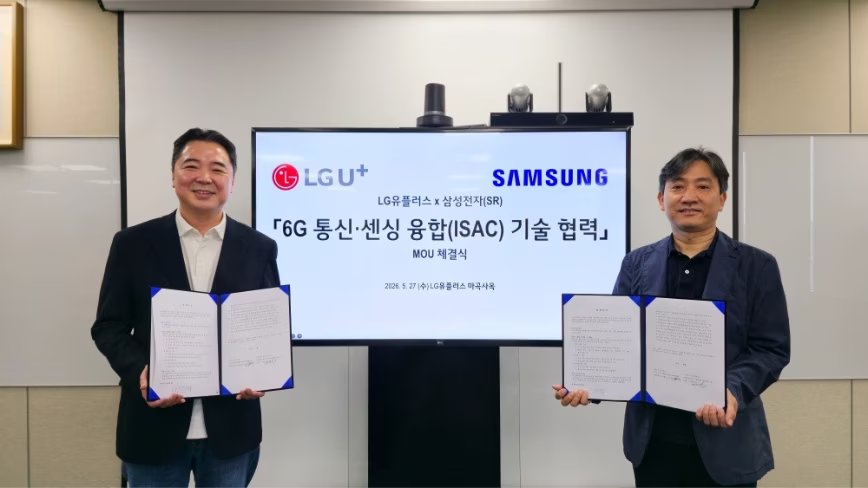
Samsung and LG Uplus plan to test integrated sensing and communication technology for 6G networks. The approach uses reflected wireless signals from cell towers to replace dedicated radar systems. Trials will evaluate environmental monitoring applications.
Why this matters
Advances in 6G sensing could reshape spectrum allocation, infrastructure costs, and capabilities for telecommunications providers worldwide.
Quick take
- Money Angle
- Adoption of ISAC could reduce capital spending on separate radar hardware while increasing demand for advanced base station equipment.
- Market Impact
- Telecom equipment suppliers and spectrum holders may see valuation shifts as 6G standards progress.
- Who Benefits
- Samsung and LG Uplus gain early testing data and potential standards influence in 6G development.
- Who Loses
- Traditional radar hardware manufacturers could face reduced demand if cellular sensing proves viable.
- What to Watch Next
- Monitor 3GPP or ITU announcements on 6G study item timelines for further technical requirements.
Perspectives on this story
AI-generated analytical lenses meant to encourage you to think across multiple frames. Not attributed to any individual; not presented as fact.
Household Impact
How this affects family budgets, jobs, and day-to-day life.
Future 6G networks may eventually lower connectivity costs or improve location services for consumers.
America First View
How this lands for readers prioritizing American sovereignty, borders, and domestic industry.
U.S. participation in 6G standards work supports domestic technology leadership and supply chain security.
Institutional View
How established institutions -- agencies, courts, allied governments -- are likely to frame it.
Spectrum regulators will evaluate interference and allocation rules for integrated sensing uses.
Civil Liberties View
How this reads through the lens of constitutional rights, free speech, and due process.
Expanded environmental sensing through cellular networks raises questions about data collection scope and privacy safeguards.
National Security View
How this matters for defense posture, intelligence, and adversary deterrence.
Dual-use sensing capabilities in 6G infrastructure could affect critical infrastructure monitoring and defense applications.
Adversary View
How foreign rivals are likely to frame this story. Not presented as fact and does not reflect the views of AFBytes.
China and other competitors are likely to emphasize their own 6G sensing programs as evidence of technological parity or superiority.
AFBytes analysis is AI-assisted and generated from source metadata, article summaries, and topic context. It is intended to help readers think through implications, not replace the original reporting from thenextweb.com. See our AI and Summary Disclosure for details.