Google AI Threat Defense uses Gemini and Wiz for vulnerability fixes
AFBytes Brief
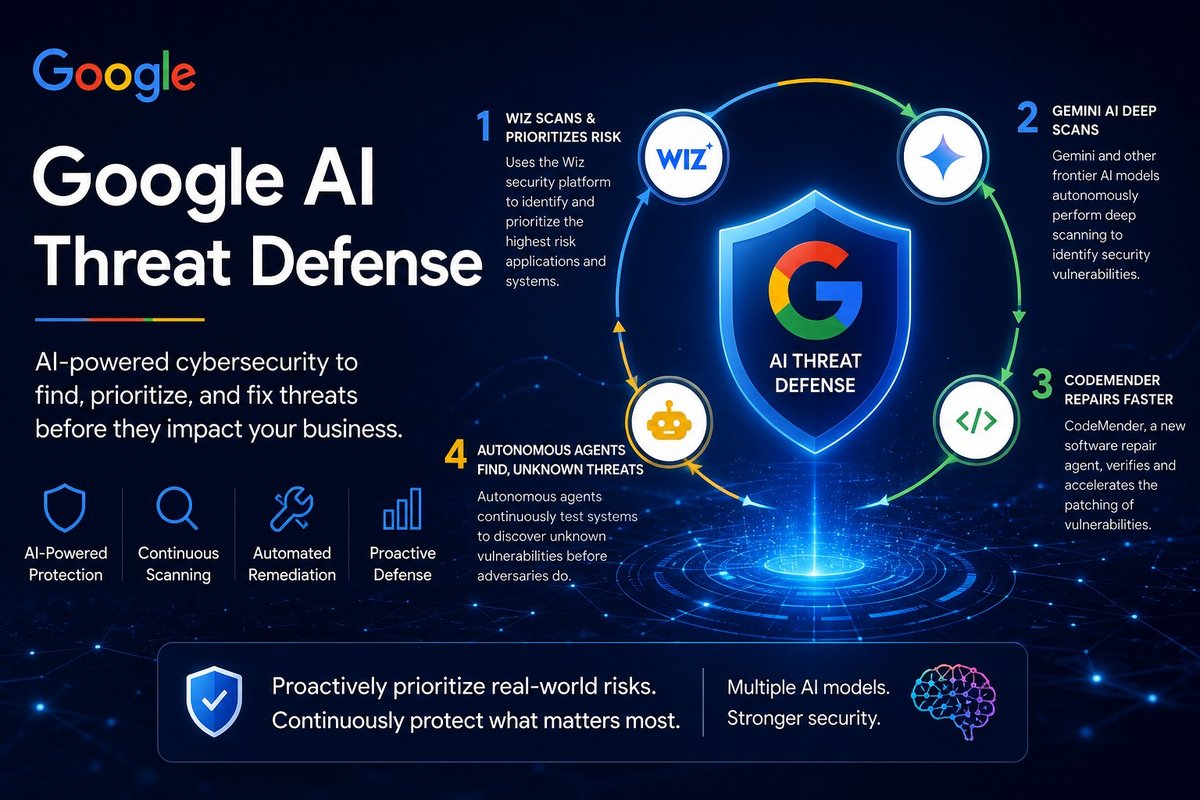
Google introduced AI Threat Defense, a cybersecurity platform that combines Gemini AI, Wiz technology, and autonomous agents. It aims to identify and remediate vulnerabilities more rapidly than traditional methods.
Why this matters
Faster vulnerability detection can reduce breach costs for companies and protect customer data. The platform targets enterprise security teams handling growing AI-related threats.
Quick take
- Money Angle
- Enterprise security budgets may shift toward integrated AI platforms that promise lower incident response times and reduced breach expenses.
- Market Impact
- Cybersecurity vendors and cloud AI providers could see increased demand while legacy scanning tools face competitive pressure.
- Who Benefits
- Google and Wiz gain expanded enterprise reach through bundled AI-driven security offerings.
- Who Loses
- Traditional vulnerability management firms may lose market share as automated AI solutions gain adoption.
- What to Watch Next
- Watch for enterprise adoption metrics or case studies from early users that quantify time-to-remediation improvements.
Perspectives on this story
AI-generated analytical lenses meant to encourage you to think across multiple frames. Not attributed to any individual; not presented as fact.
Household Impact
How this affects family budgets, jobs, and day-to-day life.
Improved corporate defenses can limit the spread of data breaches that expose consumer financial and personal information.
America First View
How this lands for readers prioritizing American sovereignty, borders, and domestic industry.
U.S. technology leadership in AI security tools strengthens domestic control over critical digital infrastructure protection.
Institutional View
How established institutions -- agencies, courts, allied governments -- are likely to frame it.
Regulators may examine how autonomous AI agents make security decisions and whether existing compliance frameworks cover their actions.
Civil Liberties View
How this reads through the lens of constitutional rights, free speech, and due process.
Expanded AI monitoring of systems raises questions about the scope of data collection used to train and operate threat detection models.
National Security View
How this matters for defense posture, intelligence, and adversary deterrence.
Faster remediation of software flaws supports resilience of critical infrastructure against state-sponsored cyber operations.
Adversary View
How foreign rivals are likely to frame this story. Not presented as fact and does not reflect the views of AFBytes.
No clear adversary framing applies to this story.
AFBytes analysis is AI-assisted and generated from source metadata, article summaries, and topic context. It is intended to help readers think through implications, not replace the original reporting from nokiapoweruser.com. See our AI and Summary Disclosure for details.