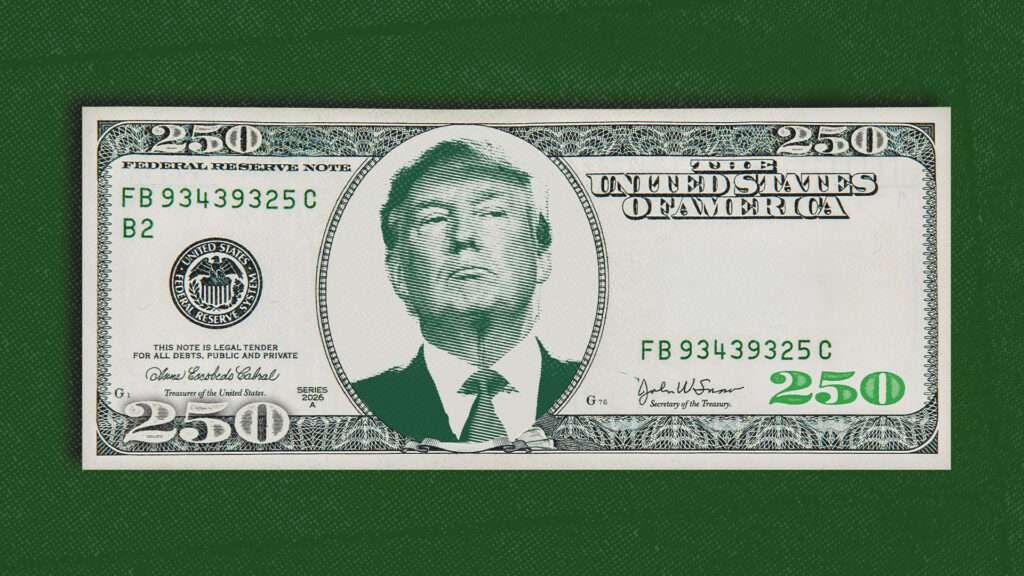
Trump $250 bill founders opposition
AFBytes Brief
A proposed $250 bill featuring a modern president revives long-standing concerns about executive imagery on money. Founders opposed such designs to avoid monarchical associations.
Why this matters
Currency design decisions affect public perception of government authority and historical norms.
Quick take
- Money Angle
- Changes to bill denominations involve production costs and circulation planning by the Treasury.
- What to Watch Next
- Monitor any Treasury or Federal Reserve announcement on new denomination testing or printing schedules.
Perspectives on this story
AI-generated analytical lenses meant to encourage you to think across multiple frames. Not attributed to any individual; not presented as fact.
Household Impact
How this affects family budgets, jobs, and day-to-day life.
Currency design rarely alters everyday cash transactions or household finances.
America First View
How this lands for readers prioritizing American sovereignty, borders, and domestic industry.
U.S. currency should reflect founding principles of limited executive symbolism.
Institutional View
How established institutions -- agencies, courts, allied governments -- are likely to frame it.
The Treasury and Congress hold statutory authority over legal tender design and production.
Civil Liberties View
How this reads through the lens of constitutional rights, free speech, and due process.
No direct civil liberties issue arises from proposed changes to paper currency.
National Security View
How this matters for defense posture, intelligence, and adversary deterrence.
Currency integrity supports financial system stability but is not tied to this proposal.
Adversary View
How foreign rivals are likely to frame this story. Not presented as fact and does not reflect the views of AFBytes.
No clear adversary framing applies to this story.
AFBytes analysis is AI-assisted and generated from source metadata, article summaries, and topic context. It is intended to help readers think through implications, not replace the original reporting from reason.com. See our AI and Summary Disclosure for details.