AI growth pressures green energy mandates in U.S. states
AFBytes Brief
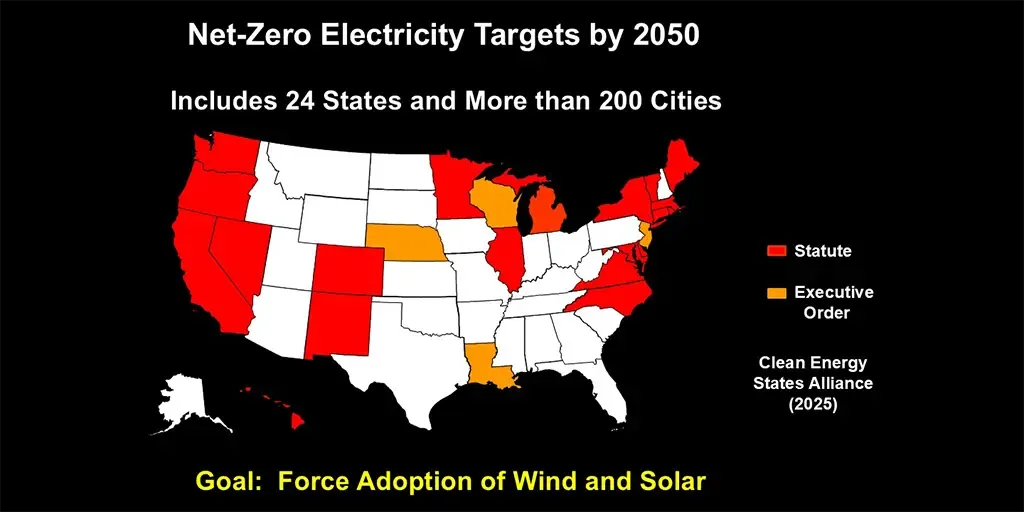
The article argues that states maintaining aggressive renewable electricity mandates risk losing AI-related economic development because data centers require large amounts of always-available power. It calls for rescinding those mandates to remain competitive.
Why this matters
Higher electricity costs from green mandates directly raise household energy bills and slow job growth in states that lose data center projects. Reliable power supply affects both industrial investment and long-term electricity prices paid by residents.
Quick take
- Money Angle
- AI data center construction requires tens of billions in capital spending on both facilities and new generation capacity, shifting investment flows toward states with fewer renewable constraints.
- Market Impact
- Power and utility stocks in states retaining strict mandates face downward pressure while equipment suppliers and developers in permissive states see increased order flow.
- Who Benefits
- States without renewable mandates and power-generation companies that can build gas or nuclear capacity win by attracting data center projects and associated tax revenue.
- Who Loses
- Renewable energy developers and states locked into aggressive clean-energy targets lose project pipelines and economic activity when AI operators choose locations with cheaper, dispatchable power.
- What to Watch Next
- Watch state legislative sessions for votes on rescinding or relaxing renewable portfolio standards and note any announcements of major data center site selections that cite power availability.
Perspectives on this story
AI-generated analytical lenses meant to encourage you to think across multiple frames. Not attributed to any individual; not presented as fact.
Household Impact
How this affects family budgets, jobs, and day-to-day life.
Electricity prices and local job opportunities are the direct stakes for households when states either retain or drop renewable mandates that influence data center location decisions.
America First View
How this lands for readers prioritizing American sovereignty, borders, and domestic industry.
Prioritizing domestic energy abundance supports U.S. technological leadership and reduces dependence on foreign supply chains for critical infrastructure components.
Institutional View
How established institutions -- agencies, courts, allied governments -- are likely to frame it.
State utility commissions and the Federal Energy Regulatory Commission evaluate projects under existing reliability and permitting statutes rather than new climate targets.
Civil Liberties View
How this reads through the lens of constitutional rights, free speech, and due process.
No clear civil liberties dimension applies to this infrastructure policy debate.
National Security View
How this matters for defense posture, intelligence, and adversary deterrence.
Secure domestic power capacity for AI computing protects critical technology infrastructure from foreign supply disruptions or coercion.
Adversary View
How foreign rivals are likely to frame this story. Not presented as fact and does not reflect the views of AFBytes.
China frames U.S. state-level renewable mandates as self-imposed constraints that slow American AI progress and widen the technology gap favoring Chinese state-supported projects.
AFBytes analysis is AI-assisted and generated from source metadata, article summaries, and topic context. It is intended to help readers think through implications, not replace the original reporting from wattsupwiththat.com. See our AI and Summary Disclosure for details.