Chinese crew completes record 210-day Tiangong mission
AFBytes Brief
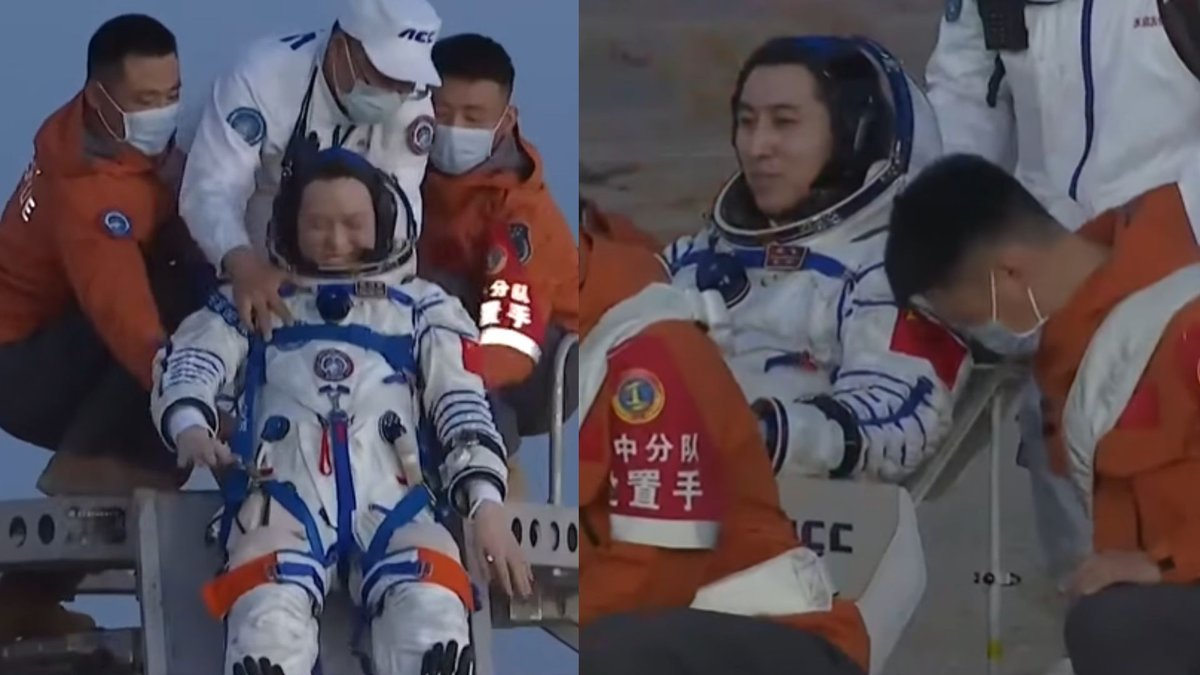
The Shenzhou-21 crew completed a 210-day stay on the Tiangong space station, exceeding previous Chinese records. The astronauts returned safely to Earth following the mission.
Why this matters
Extended Chinese space operations contribute to national prestige and technological capability in orbital activities.
Quick take
- Who Benefits
- Chinese space program gains operational experience from the extended mission.
- What to Watch Next
- Observe subsequent Chinese crew rotation announcements for continued station operations.
Perspectives on this story
AI-generated analytical lenses meant to encourage you to think across multiple frames. Not attributed to any individual; not presented as fact.
Household Impact
How this affects family budgets, jobs, and day-to-day life.
Chinese space achievements have minimal immediate impact on household costs or employment.
America First View
How this lands for readers prioritizing American sovereignty, borders, and domestic industry.
The mission underscores China's independent progress in crewed spaceflight capabilities.
Institutional View
How established institutions -- agencies, courts, allied governments -- are likely to frame it.
Chinese space authorities present the flight as successful execution of national space station objectives.
Civil Liberties View
How this reads through the lens of constitutional rights, free speech, and due process.
No civil liberties issues are raised by the reported space mission.
National Security View
How this matters for defense posture, intelligence, and adversary deterrence.
Long-duration spaceflight experience supports broader Chinese aerospace and technology development.
Adversary View
How foreign rivals are likely to frame this story. Not presented as fact and does not reflect the views of AFBytes.
U.S. observers may interpret the record as evidence of China's advancing space infrastructure independent of international partners.
AFBytes analysis is AI-assisted and generated from source metadata, article summaries, and topic context. It is intended to help readers think through implications, not replace the original reporting from interestingengineering.com. See our AI and Summary Disclosure for details.