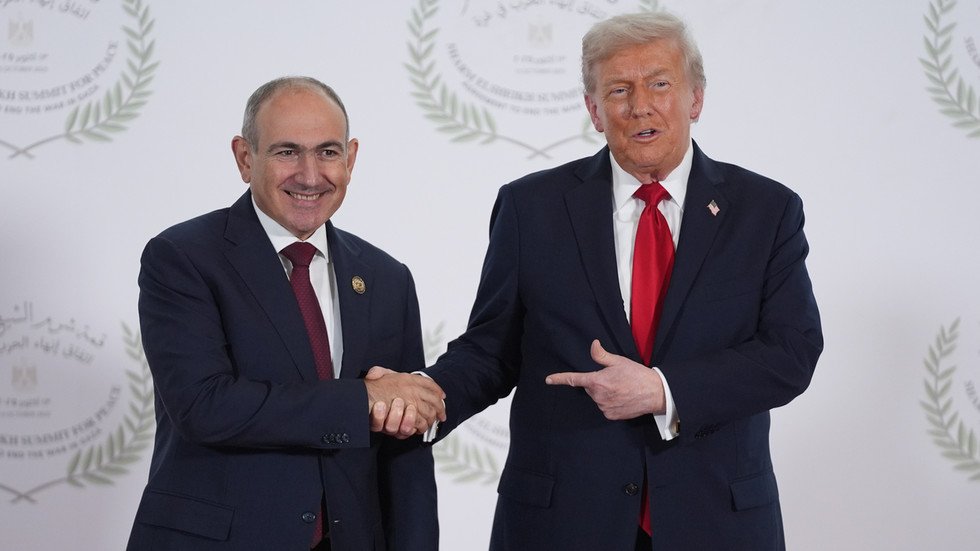
trump backs pashinyan reelection
AFBytes Brief
Donald Trump publicly supported Nikol Pashinyan for reelection after Armenia and the U.S. concluded the TRIPP deal. Russia responded with warnings about possible loss of influence in Yerevan.
Why this matters
U.S. endorsement of Armenian leadership could influence regional stability and affect energy and trade routes involving multiple countries.
Quick take
- Money Angle
- The TRIPP deal may open new investment channels in Armenian infrastructure and energy sectors.
- Market Impact
- Regional energy and construction firms could see contract opportunities while Russian-linked entities face reduced leverage.
- Who Benefits
- Armenian government and U.S. companies involved in the TRIPP deal gain diplomatic and commercial support.
- Who Loses
- Russian state interests risk diminished regional influence and commercial positioning.
- What to Watch Next
- Track upcoming Armenian election timelines and any follow-on U.S. aid or trade announcements for confirmation of the endorsement effects.
Perspectives on this story
AI-generated analytical lenses meant to encourage you to think across multiple frames. Not attributed to any individual; not presented as fact.
Household Impact
How this affects family budgets, jobs, and day-to-day life.
Changes in regional alliances could indirectly affect global energy prices paid by U.S. households.
America First View
How this lands for readers prioritizing American sovereignty, borders, and domestic industry.
U.S. engagement in the Caucasus can strengthen trade leverage and reduce dependence on adversarial supply routes.
Institutional View
How established institutions -- agencies, courts, allied governments -- are likely to frame it.
The State Department would frame the endorsement within existing treaty and foreign assistance authorities.
Civil Liberties View
How this reads through the lens of constitutional rights, free speech, and due process.
No direct domestic civil liberties questions are raised by this foreign policy statement.
National Security View
How this matters for defense posture, intelligence, and adversary deterrence.
The move aims to bolster a partner government and counterbalance Russian influence in a sensitive region.
Adversary View
How foreign rivals are likely to frame this story. Not presented as fact and does not reflect the views of AFBytes.
Russian officials are likely to describe the U.S. action as interference in post-Soviet affairs and an attempt to weaken traditional alliances.
AFBytes analysis is AI-assisted and generated from source metadata, article summaries, and topic context. It is intended to help readers think through implications, not replace the original reporting from rt.com. See our AI and Summary Disclosure for details.